

What is AQI, in Simple Words?
– Vibhor Agarwal
Think of AQI as a daily report card for the air. Just like you check the weather forecast for sun or rain, the AQI tells you whether the air outside is clean or polluted.
It’s a single number – the lower the number, the cleaner the air. This number is prepared by the Central Pollution Control Board (CPCB) using data from many air monitors in your city. They measure dust, smoke, and harmful gases in the air.
What Do the AQI Numbers Mean?
Here’s a simple way to understand the AQI scale:
- 0–50 (Good) – Air is clean and safe for everyone.
- 51–100 (Satisfactory) – Okay for most people, though sensitive groups (kids, elderly, asthma patients) may feel slight discomfort.
- 101–200 (Moderate) – Might affect people with breathing or heart problems.
- 201–300 (Poor) – Can cause issues even for healthy people with longer exposure.
- 301–400 (Very Poor) – May lead to breathing trouble, even indoors.
- 401–500+ (Severe) – Dangerous for everyone; even short exposure can be harmful.
Example: In cities like Delhi, AQI can go above 300 in winter. A simple walk can lead to coughing or tightness in the chest. Children, the elderly, and those with asthma suffer the most.

Why Should You Check AQI Every Day?
1. To Protect Your Health
AQI helps you decide whether it’s safe to go outside or if you need to take precautions. Just like checking if it’s raining before leaving home, AQI tells you whether you should wear a mask or avoid exercise outdoors.
Example: If the AQI is “Poor” in the evening, instead of a walk in the park, try light exercises or yoga indoors.
2. To Plan Your Day Better
Knowing the AQI can help decide if your kids should play outdoors or if it’s a good time for a jog. Schools and offices can plan accordingly, too.
3. To Take Simple Precautions
When AQI is high, you can take small steps to reduce harm:
- Stay indoors as much as possible.
- Close windows to prevent polluted air from entering.
- Wear a quality mask if you need to go out.
- Use air purifiers if you have access to them.
Today, different types of purifiers are available:
- Room air purifiers help reduce indoor pollution.
- Car air purifiers are useful when you’re stuck in traffic or driving in cities.
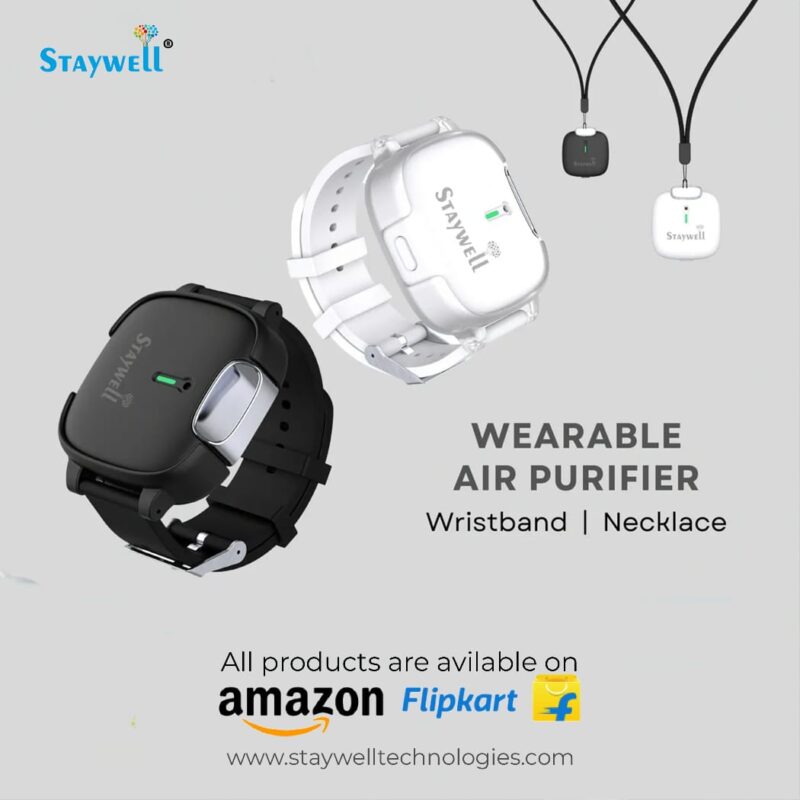
- Necklace air purifiers are small personal devices that create a cleaner air zone around your face — especially helpful for students, office-goers, or elderly people.
These are not luxury items anymore — they’re a practical layer of protection in today’s air conditions.
Where Can You Check the AQI?
It’s easy now:
- Many weather apps (like Google Weather) show AQI for your area.
- Government websites like airquality.cpcb.gov.in provide live AQI updates.
- You’ll also find displays at some traffic signals and public places.
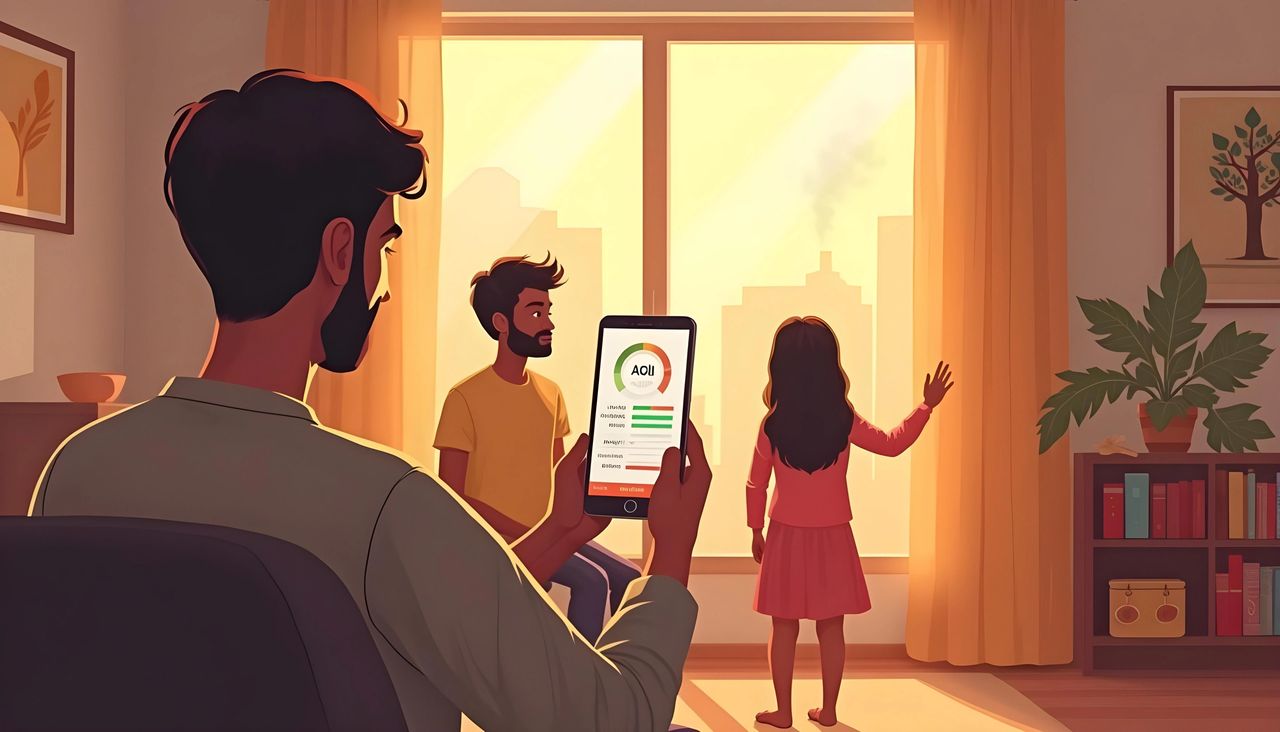
Tip: Try making it a habit to check AQI each morning like you check the weather. It can help your whole family make better choices.

Let’s All Be a Part of the Change
Understanding AQI doesn’t just help us stay safe — it also helps us raise our voice for cleaner air. When we know the problem, we can:
- Ask for greener transport options.
- Avoid waste burning.
- Support stricter pollution controls.
- Plant trees and support local clean-air initiatives.
Final Thoughts
Air pollution may be invisible, but its effects are very real. The good news is: we can protect ourselves by staying informed and taking small steps.
Let’s make air quality a regular part of our health routine. It’s not just about surviving, it’s about living better.
So today, start by checking the AQI. Make it a daily habit. Stay safe. Breathe better. Live healthier.
– Vibhor Agarwal
Clean Air Advocate
For a Healthier, Safer Tomorrow